
The Triumph of Stupidity, an infinite series
 By
By 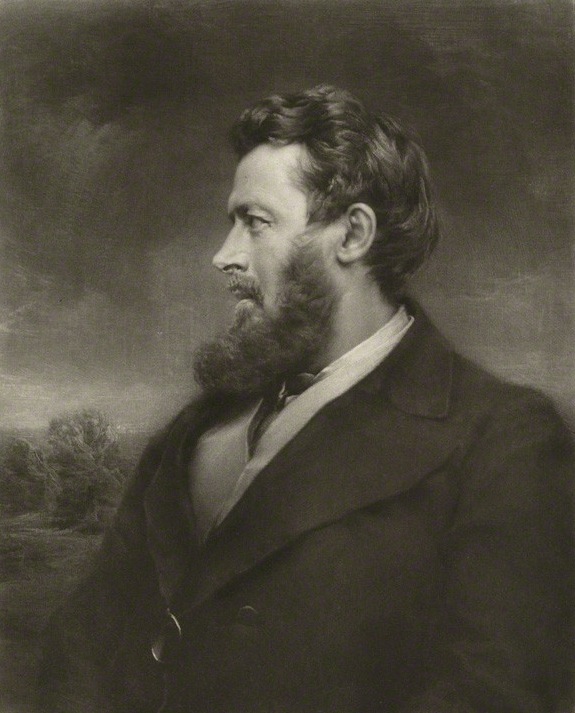
Markwayne Mullin, who IIRC is a senator from Oklahoma or some other ungovernable tribal region, also referred repeatedly to declaring war on “Iraq.”
“Dumber than Tommy Tuberville” would seem like an impossible bar to leap, but with the help of Confederate Jesus, all things are possible.
Mainstream American culture has always been suspicious of intelligence in general and intellectuals in particular. The abiding faith that the virtuously stupid will in the end triumph over the malevolently clever may not be an exclusively American belief – similar tendencies can be found in many pietistic traditions around the world – but it is one of our most striking national characteristics.
It turns out that something very much like this faith is at the core of much of both highbrow conservative thought, and the more sinister manifestations of right wing ideology.
Consider the views of the once enormously influential, though now largely forgotten, Victorian writer Walter Bagehot. (Bagehot might have been Woodrow Wilson’s favorite essayist. In 1889 the president of the Traveler’s Insurance Company was so taken by the wisdom of Bagehot’s observations that he had the company pay to publish a five-volume collection of his works, and then send copies to the firm’s policy holders).
Bagehot celebrated the stubborn stupidity of the English people as the key aspect of the nation’s enduring greatness. “Stupidity,” he observed, is “about the most essential mental quality for a free people, whose liberty is to be progressive, permanent, and on a large scale.” Bagehot considered stupidity to be “nature’s favorite recourse for preserving steadiness of conduct and consistency of opinion.”
“A great part of the ‘best’ English people,” Bagehot claimed, “keep their mind in a state of decorous dullness. They maintain their dignity; they get obeyed; they are good and charitable to their dependents. But they have no notion of play of mind; no conception that the charm of society depends on it.” It was precisely because the English ruling class, unlike the excitable and erratic French, had no attraction to ideas for their own sake – in a word they were not intellectuals – that liberty flourished in the former rather than the latter nation. (Compare George Orwell on how the English ruling class retained power in the face of the gross injustice of the economic system that supported them: “They had to feel themselves true patriots, even while they plundered their countrymen. Clearly there was only one escape for them –into stupidity. They could keep society in its existing shape only by being unable to grasp that any improvement was possible.”)
While Bagehot was an eminent Victorian, the importance attributed by contemporary conservative thought to keeping people with a perverse tendency towards thinking away from political power is reflected in founder of the National Review William F. Buckley’s remark that he “would rather be governed by the first 2,000 people in the telephone directory than by the Harvard faculty.”
The long-running campaign by conservative intellectuals to attempt to quash the cultural and political influence of intellectuals may have reached a kind of self-contradictory theoretical maximum in Paul Johnson’s much-lauded full-scale attack on intellectuals, entitled simply Intellectuals. For Johnson, intellectuals as a class appear to be a collection of arrogant know-it-alls, addicted to their hubristic and delusional sense of intellectual superiority, and prone to hypocritical decadence in the conduct of their personal affairs (This latter charge would prove doubly ironic, after the very married and publicly very Catholic Johnson’s long-time mistress blasted him in the media, for dumping her for a younger model).
Johnson’s polemic concludes with this claim:
A dozen people picked at random on the street are at least as likely to offer sensible views on moral and political matters as a cross-section of the intelligentsia. But I would go further. One of the principal lessons of our tragic century, which has seen so many millions of innocent lives sacrificed in schemes to improve the lot of humanity, is-beware intellectuals. Not merely should they be kept well away from the levers of power, they should also be objects of particular suspicion when they seek to offer collective advice.
The first thing I always want to ask the authors of such claims is: have you had many conversations with random people on the street, or similarly prosaic venues? Because in my experience it’s much easier to retain a pious reverence for the untutored wisdom of ordinary people if one’s contact with their views is kept to a bare minimum.
From the chapter “Celebrating Stupidity,” in The Triumph of Stupidity