
How Did Iran Bring the F-15 Down?
 By
By 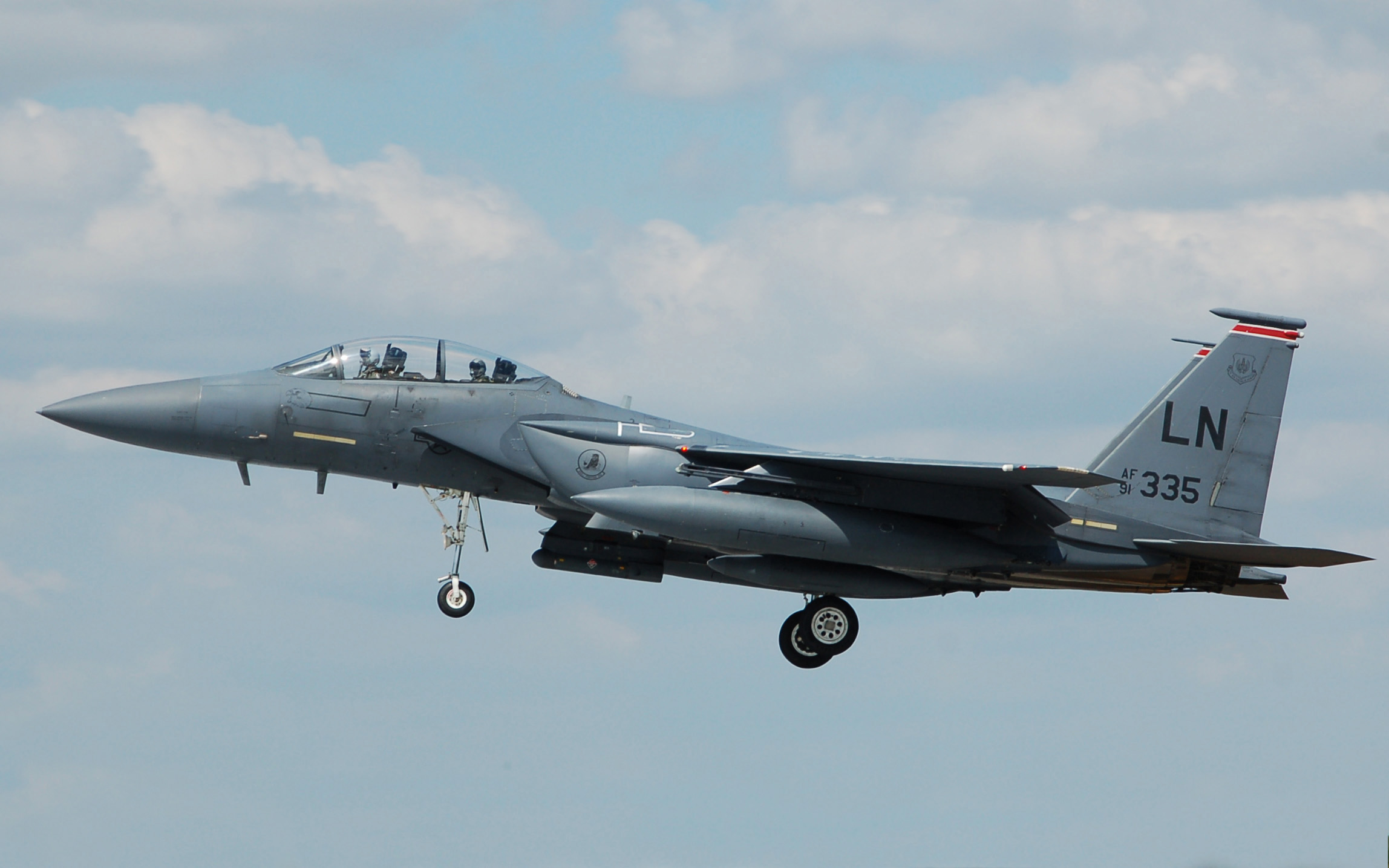
As for the F-15E incident over Iran, you can read our analysis of what was previously revealed about what happened here.
While the exact cause of the loss of the F-15E hasn’t been revealed, NBC News previously quoted three unidentified officials who said the jet “was probably struck by a Chinese-made shoulder-launched missile” and that the engagement may have been supported by a “long-range early-warning radar that spots stealth aircraft,” which Iran received in the “early days” of the war. U.S. President Donald Trump also reportedly said that the Iranians used a shoulder-fired missile, and that “they got lucky.”
Furthermore, while the pilot was rescued within hours, the WSO hid out in a crevice as both rescuers and Iranians frantically searched for him. They were picked up around 50 hours after ejection, aided by a rescue mission involving hundreds of troops, scores of aircraft, and diversion operations over more than a half dozen different parts of Iran. The effort also saw the loss of a second aircraft, an A-10 attack jet in the air, as well as two MC-130J Commando II special operations cargo planes and several H-6 Little Bird special operations helicopters that were destroyed on the ground.
The most dramatic interpretation, that a drone swarm directly participated, even if by happenstance, in the shootdown of the Strike Eagle, cannot be entirely ruled out, but there is no publicly available evidence supporting it. There is the description of this formation being a “minefield,” as in something the F-15 could stumble into. This is an interesting note and it may just be how it was mentioned figuratively. At the same time, putting up some sort of a drone screen formation along a known route, especially if it is being used for low-level transits, or near a high-risk facility, could make some sense. Basically, the aircraft would fly into it and be destroyed if it hits a drone, the drones are detonated in close proximity to the aircraft or even if they are connected physically somehow and the aircraft hits the cables. This would match with the description, to a degree, and it would not require any sort of real swarming capability. This would be something of a new ‘barrage balloon’ concept that is more flexible and easier to deploy on demand. China is using balloons in a similar manner to protect key installations today. In addition, Iran certainly has employed its fair share of bizarre tactics and weapons concepts to that point that this doesn’t seem that implausible, but still, it is just a guess.
The article (which is about a month old, and I haven’t followed more recent developments) is appropriately cagey with respect to the role that drones play in bringing the F-15 down; the accounts of the pilot and Weapon Systems Officer (WSO) mention the drones but the actual mechanism of downing the Eagle seems to have been a shoulder-fired missile. But at the very least there are interesting questions to be asked about the role that the drones played, possibly as air denial “minefield” to either ambush the plane or at least to modify its path in order to bring it under more traditional modes of fire.
The answer to the question “Why are we still buying super-expensive fighter jets instead of cheap drones?” can generally be answered “because cheap drones cannot be flown at altitudes or at speeds that are competitive with modern military aircraft,” which has been true thus far, as far as it goes. In this conflict as in Russia and Ukraine the only serious success that drones have had against modern military aircraft has been as long range strike (destroying aircraft on the ground), and traditional surface-to-air missile roles (a SAM is just a drone designed for a very specific, one way mission). If there’s a way to productively employ drones in an air defense role it would be a VERY interesting development.