
The Triumphs and Travails of CVN-78
 By
By 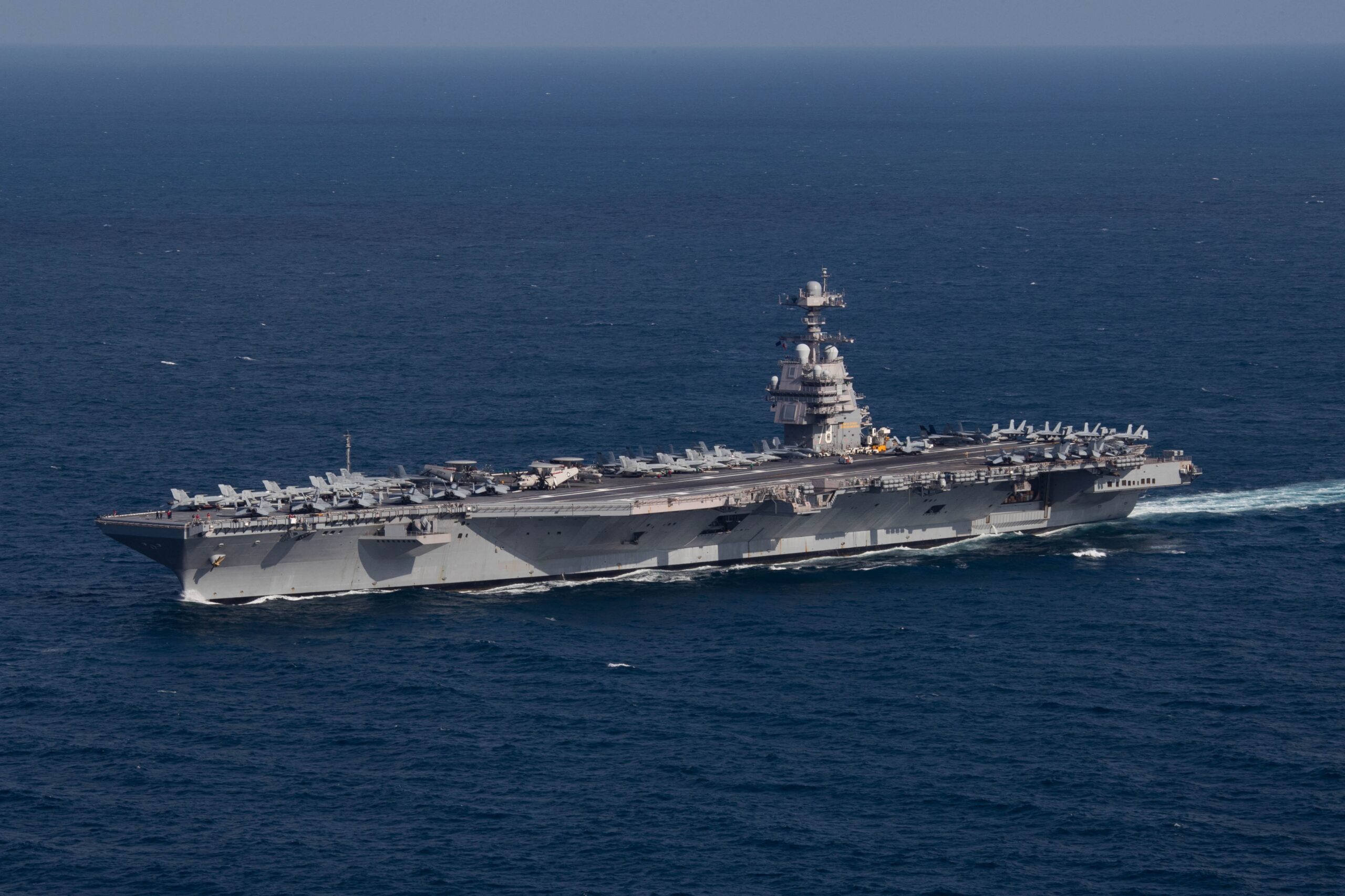
I took brief account of USS Gerald R. Ford’s long deployment at National Security Journal:
Observers have drawn opposite conclusions about Ford’s difficulties over the past year.
On the one hand, it’s a bad look for the Navy when a laundry fire threatens to sideline the world’s most powerful (and most expensive) warship.
On the other hand, some have argued that the exhaustion evident at the end of CVN-78’s deployment indicates that the USN needs more aircraft carriers.
These arguments tend to devolve along well-known battlelines, with carrier skeptics falling into the former camp and carrier enthusiasts into the latter.
In purely analytical terms there is still much discussion of the technological “winners” and “losers” of the war. The conflict has been Good for the F-35 in terms of demonstrating its viability as a deep strike platform, and I’d say on balance that it’s also been Good for the Aircraft Carrier; US carriers have fared better than US bases in terms of avoiding or fending off attacks, in part because a carrier strike group has formidable defenses and in part because aircraft carriers can move. This is one of the reasons the problems with CVN-78 were felt so acutely.