
The Peale of Trump
 By
By 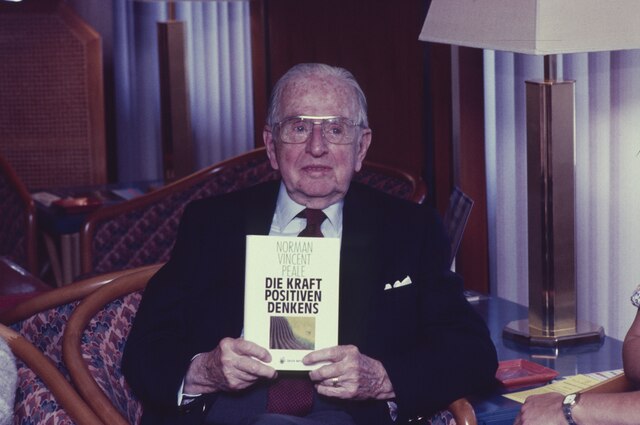
This is a really important and not widely understood point about Trump and why his second administration is going particularly badly:
Once again reminding everyone that Trump's actual philosophy is "the power of positive thinking" a delusional, narcissistic philosophy where you presume success of every venture ahead of time and turn every setback into a victory as a retroactive cope
[image or embed]— mtsw (@mtsw.bsky.social) Mar 7, 2026 at 1:32 PM
The Power of Positive Thinking isn’t just an influential book Trump half-remembers because people talked a lot about it at the time. Norman Vincent Peale played a huge role in Trump’s life:
Event No. 1 occurred in October 1952, when a book appeared called The Power Of Positive Thinking. Written by Dr. Norman Vincent Peale and translated into 15 languages, it remained on the New York Times best-seller list for 186 weeks and sold 5 million copies. Donald was only 6 years old at the time and didn’t read the book until much later, but it quickly became important in the large Queens household in which he grew up, and it would play a critical role in his future. His parents, Fred and Mary, felt an immediate affinity for Peale’s teachings. On Sundays, they drove into Manhattan to worship at Marble Collegiate Church, where Peale was the head pastor. Donald and both his sisters were married there, and funeral services for both Fred and Mary took place in the main sanctuary.
“I still remember [Peale’s] sermons,” Trump told the Iowa Family Leadership Summit in July. “You could listen to him all day long. And when you left the church, you were disappointed it was over. He was the greatest guy.” A month later, in the same news conference at which Trump tossed out Univision anchor Jorge Ramos, he again referred to Peale as his pastor and said he was “one of the greatest speakers” he’d ever seen.
Known as “God’s salesman,” Peale merged worldliness and godliness to produce an easy-to-follow theology that preached self-confidence as a life philosophy. Critics called him a con man, described his church as a cult, and said his simple-minded approach shut off genuine thinking or insight. But Peale’s outlook, promoted through his radio shows, newspaper columns and articles, and through Guideposts, his monthly digest of inspirational messages, fit perfectly into the Trump family culture of never hesitating to bend the rules, doing whatever it took to win, and never, ever giving up.
“Believe in yourself!” Peale’s book begins. “Have faith in your abilities!” He then outlines 10 rules to overcome “inadequacy attitudes” and “build up confidence in your powers.” Rule one: “formulate and staple indelibly on your mind a mental picture of yourself as succeeding,” “hold this picture tenaciously,” and always refer to it “no matter how badly things seem to be going at the moment.”
Subsequent rules tell the reader to avoid “fear thoughts,” “never think of yourself as failing,” summon up a positive thought whenever “a negative thought concerning your personal powers comes to mind,” “depreciate every so-called obstacle,” and “make a true estimate of your own ability, then raise it 10 per cent.”
This should all sound very familiar, with the Iran War being just one particularly vivid demonstration. As Blair says, a classic pre-political example was Trump destroying the USFL and declaring it a success, indeed claiming that the jury awarded $3 in damages because Trump had been so effective that they felt sorry for the Shield. (The story is well told in Jeff Pearlman’s book.)
Peale’s philosophy helped make Trump a much more effective candidate than he’s often given credit for, but needless to say as an unbound governing ethos it’s catastrophic.
Now if you’ll excuse me…