
Bite the Big Apple
 By
By 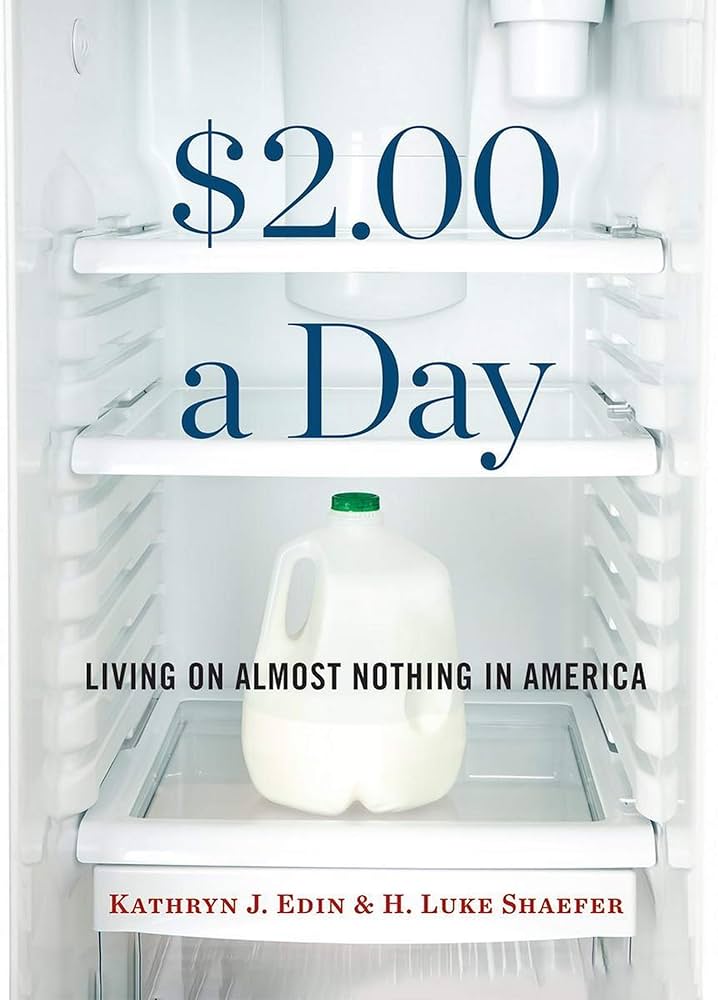
This town’s wearing tatters:
Rent is not the largest monthly expense for Anala Gossai and Brendon O’Leary, a couple who live on the Upper West Side of Manhattan. That would be child care.
They spend $4,200 each month on day care for their 1-year-old son, Zeno.
“We really liked the center,” Ms. Gossai, 37, said. “Neighbors in our building love it. It’s actually pretty middle of the road for cost. Some were even more expensive.”
The rent for their one-bedroom apartment is $3,900 per month. Space is tight, but the location is priceless.
“We’re right across from Central Park,” she said. “We can walk to the subway and the American Museum of Natural History.”
Ms. Gossai, a data scientist, and her husband, 38, a software engineer, met in graduate school. Their household income is roughly $500,000 per year. While they make a good living, they try to be frugal and are saving money to buy an apartment.
They moved into their roughly 800-square-foot rental eight years ago when it was just them and their dog, Peabody, a Maltese poodle. Now their son’s crib is steps away from their bed. They installed a curtain between the bed and the crib to keep the light out. . .
Ms. Gossai is from Toronto, and Mr. O’Leary is from Massachusetts. In New York City, wealth is often viewed in relation to your neighbors, and many of theirs make more money. The Upper West Side has the sixth-highest median income of any neighborhood in the city, according to the N.Y.U. Furman Center.
“I think we’re middle class for this area,” Mr. O’Leary said. “We’re doing OK.”
The couple tries to save about $10,000 [!!!!] each month to put toward an apartment or for an emergency. They prioritize memberships to the Central Park Zoo at $160 per year and the American Museum of Natural History at $180 per year.
I’m really not criticizing this couple, whose name in any event is legion in the New Gilded Age, because these are very much structural social problems, not a reflection on Kids These Days.
Still, this article enraged me, because I just taught $2.00 a Day and Evicted in my class on the economics of the American legal system, and the stories of the people in those books — of how hard they work, of what they sacrifice so their children can (literally) eat, of the impossible obstacles that life in America throws in front of them every day — are not something that are easy to forget. Unless you’re a Trump-style “Christian,” I suppose.
Parents like Jennifer, Susan, and Rae express desires that are quite modest. Full-time hours come first. That is a prize that can be astonishingly hard to wrest from a low-wage employer who wants to avoid added costs associated with full-time employment, such as health insurance and paid time off. A predictable schedule, so parents can arrange for safe, reliable child care, comes next. A few say they would be happy if they could get just those two things. Yet finding a job with even those basic attributes is something Susan Brown feels she can only dream of, not expect. Most parents, like Jennifer and Rae, hope for a little more. If they could just make $12 or $13 per hour, they say, they could make it; $15 per hour is really shooting the moon. Safe working conditions, and some sick or personal days, would be a real plus. The other “extras” that once came routinely with a full-time job—health insurance, vacation days, and retirement benefits—don’t often come up in conversations with the $2-a-day poor. These perks are so uncommon among the jobs available to low-wage workers that they seem all but outside the bounds of reality.
$2.00 a Day
The one thing that everyone who has read A Tale of Two Cities remembers is the Reign of Terror. The whole book is dominated by the guillotine — tumbrils thundering to and fro, bloody knives, heads bouncing into the basket, and sinister old women knitting as they watch. Actually these scenes only occupy a few chapters, but they are written with terrible intensity, and the rest of the book is rather slow going. But A Tale of Two Cities is not a companion volume to The Scarlet Pimpernel. Dickens sees clearly enough that the French Revolution was bound to happen and that many of the people who were executed deserved what they got. If, he says, you behave as the French aristocracy had behaved, vengeance will follow. He repeats this over and over again. We are constantly being reminded that while ‘my lord’ is lolling in bed, with four liveried footmen serving his chocolate and the peasants starving outside, somewhere in the forest a tree is growing which will presently be sawn into planks for the platform of the guillotine, etc., etc., etc. The inevitability of the Terror, given its causes, is insisted upon in the clearest terms:
“It was too much the way… to talk of this terrible Revolution as if it were the only harvest ever known under the skies that had not been sown — as if nothing had ever been done, or omitted to be done, that had led to it — as if observers of the wretched millions in France, and of the misused and perverted resources that should have made them prosperous, had not seen it inevitably coming, years before, and had not in plain terms recorded what they saw.”
And again:
“All the devouring and insatiate monsters imagined since imagination could record itself, are fused in the one realization, Guillotine. And yet there is not in France, with its rich variety of soil and climate, a blade, a leaf, a root, a spring, a peppercorn, which will grow to maturity under conditions more certain than those that have produced this horror. Crush humanity out of shape once more, under similar hammers, and it will twist itself into the same tortured forms.”
In other words, the French aristocracy had dug their own graves.
George Owell, “Charles Dickens” (1940)