
Trump’s cult of personality
 By
By 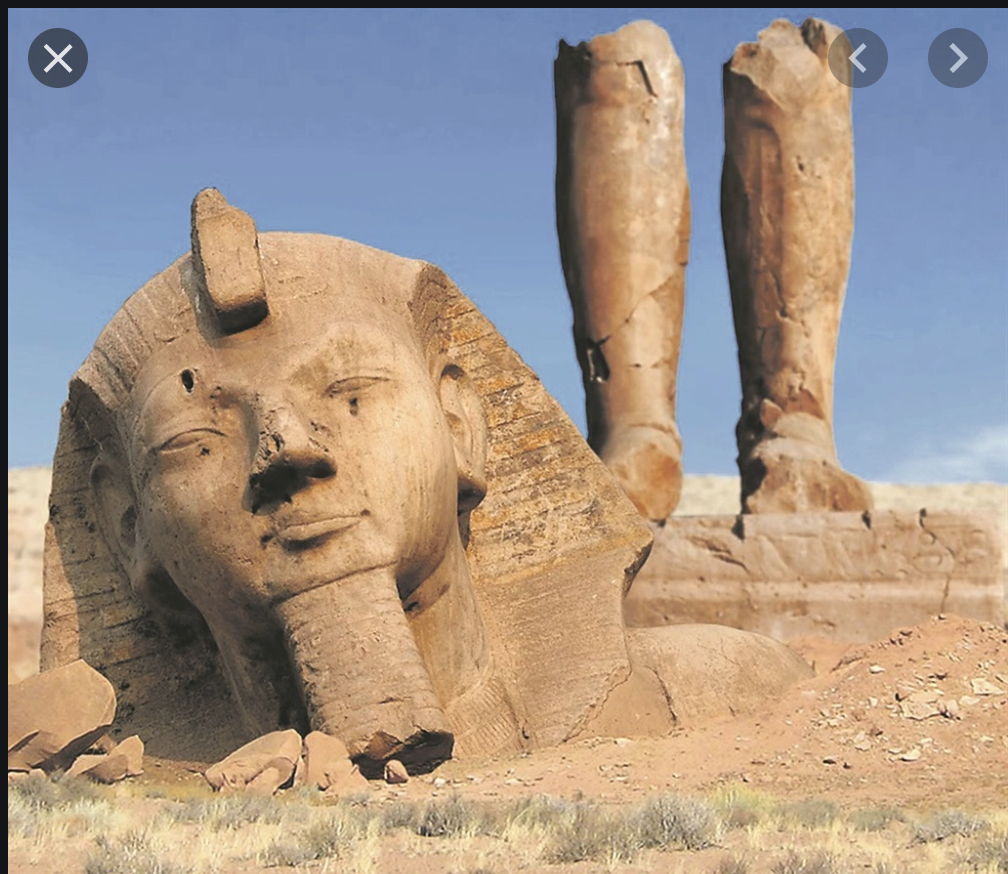
Peter Baker, known for his leading role at the New York Times in nurturing the cult of Both Sides, doesn’t pull any punches in this essay (gift link) on Donald Trump’s increasingly brazen cult of personality:
The racist online video that President Trump recently shared and then deleted generated a bipartisan furor because of its portrayal of Barack and Michelle Obama as apes. What was little remarked on was how it presented Mr. Trump himself — as the “King of the Jungle.”
After a year back in the White House, Mr. Trump’s efforts to promote himself as the singularly dominant figure in the world have become so commonplace that they no longer seem surprising. He regularly depicts himself in a heroic, almost godly fashion, as a monarch, as a Superman, as a Jedi knight, as a military hero, even as a pope in a white cassock.
While Mr. Trump has spent a lifetime promoting his personal brand, slapping his name on hotels, casinos, airplanes, even steaks, neckties and bottled water, what he is doing in his second term as president comes closer to building a cult of personality the likes of which has never been seen in American history. Other presidents sought to cultivate their reputations, but none went as far as Mr. Trump has to create a mythologized, superhuman and omnipresent persona leading to idolatry.
Baker goes on to note that Trump’s efforts to immortalize himself are reminiscent of the most absurd excesses of regimes lampooned in Borat films:
The efforts to exalt himself, however, have accelerated in the past year far beyond his first term and have increasingly come to resemble eccentric regimes in far corners of the world. To those who have spent time in the former Soviet Union, the “Don Colossus” statue bears a striking resemblance to the rotating gold statue erected by Saparmurat Niyazov, the megalomaniacal former dictator of Turkmenistan who called himself Turkmenbashi and even renamed the months of the year after himself and his family.
And of course the political significance of all this is that a cult of personality can’t exist without a mass political movement that embraces its fundamentally anti-democratic and essentially authoritarian character:
“There is no settled definition of a cult of personality, but for us this qualifies,” Benjamin E. Goldsmith of the Australian National University and Lars J.K. Moen of the University of Vienna, who have studied Mr. Trump’s hold on his supporters, said in a joint email.
The two scholars, who published a paper on the phenomenon in the Political Psychology journal, said the personality cult allowed Mr. Trump to dominate Republican primary contests, right-wing media and his party’s majorities in Congress. Those who stand against Mr. Trump are deemed traitors and punished accordingly.
“For us, this is the major threat to U.S. democracy from Trump’s cultlike following,” they wrote. “Congress is transformed into an enabler, even when the executive makes disastrous policies, undermines the rule of law or might attempt to fix elections. The system can transform into an electoral autocracy. Our bet is that we’re already far along that path.”
Historical side note that I wasn’t aware of:
Herbert Hoover surely would have preferred not having his name attached to the Great Depression shantytowns called Hoovervilles, although the Hoover Dam was named for him while he was in office. (Franklin D. Roosevelt stripped the name; Harry S. Truman restored it.)
Hoover’s very name was still pure electoral poison during Truman’s presidency, so it’s surprising that he reversed FDR’s decision. ETA: Andrew Gelman points out to me that after the wave election of 1946, the GOP-controlled Congress passed a bill to restore the original name, and Truman may have understandably not wanted to spend any political capital on such a petty issue by vetoing it.
Needless to say, the US is going to require massive de-Trumpification, and there may well be decades of battles over things such as whether Texas high school history textbooks should refer to him as the greatest president in American history, or merely one of them. Although in the alternative it’s also quite possible that it will turn out nobody, or at least nobody important, ever actually supported him.