
A Nice Quiet Story
 By
By 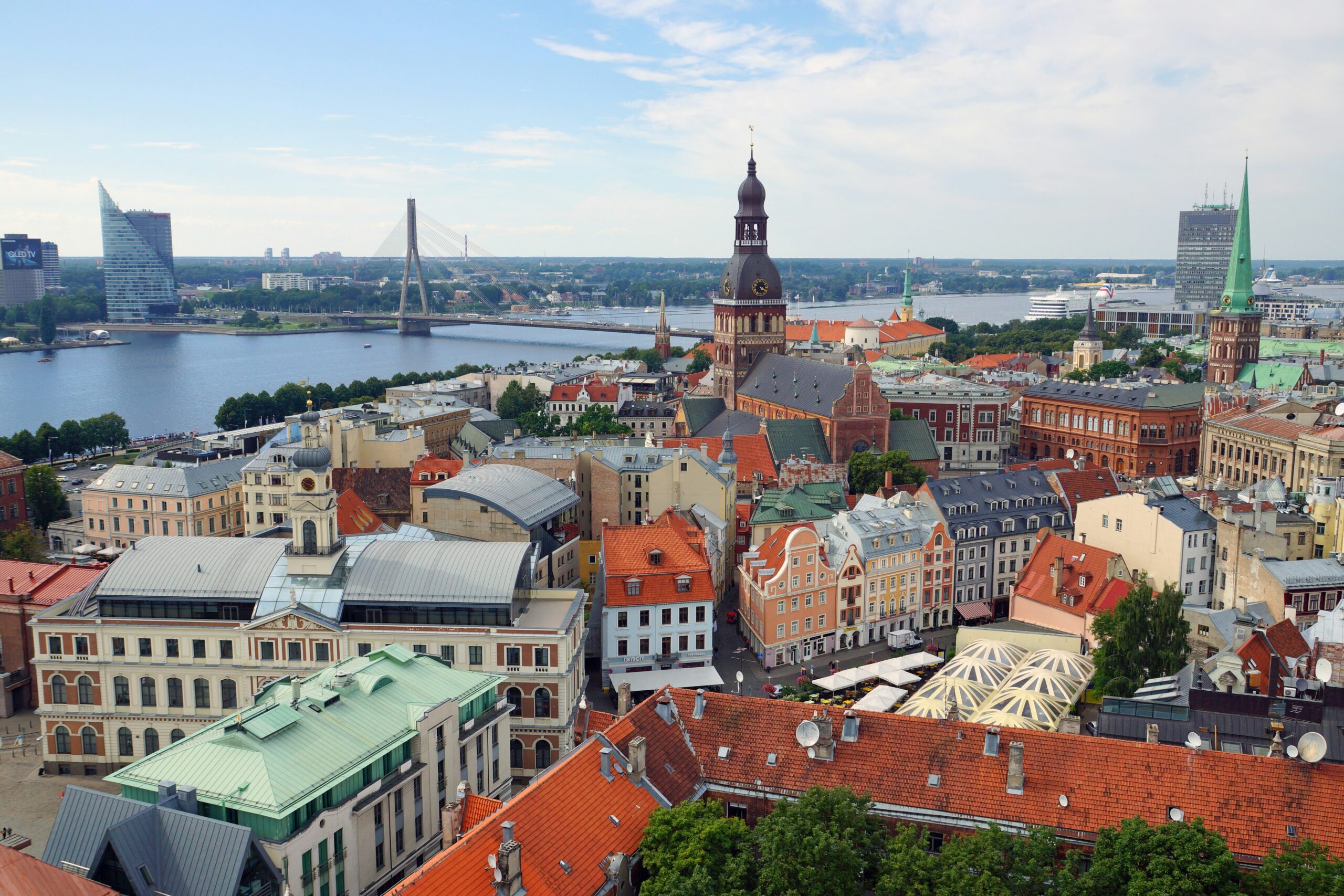
Riga is the capital of Latvia. I’ve never been there, have only just stepped over the border with Estonia. I’d love to visit Riga, though, with its Jugendstil architecture.
Since we’re in the holiday season, it’s nice to read a story about people being good and living in a reasonable way. That’s particularly the case this year, as we have had continuing rampaging and destruction from our government. I like to think that this piece illustrates some of what we might try after we’ve vanquished the horde. Quiet. Courteous. Making little everyday things work. A couple of selections:
There is another layer as well. You hear short phrases in Latvian, answers in Russian, the occasional English word dropped in like a visiting relative. Many older passengers slip between languages with practiced ease, choosing the one that will create the least friction in that moment. Silence, here, is not only shyness; it can also be a way of keeping peace in a carriage where memories run in more than one tongue.
If you come from a city where politeness is announced loudly – “Please move down the carriage!”, “Let the passengers off first!” – Riga’s tram etiquette can seem almost too quiet. No one lectures you. Instead, the rebuke comes as a soft, collective exhale when you block the doorway, or in the way people subtly rearrange themselves to correct your mistake. You learn quickly. The validator beep becomes a small marker that you belong: you know where to stand, when to step aside, how to tap in without turning it into a performance.
At the market –
At first, the market feels chaotic. Fish, flowers, cheese, people crossing each other’s lines. Then you notice the invisible rails. Each stall has its own micro-queue, a loose but respected line of bodies and eye contact. People keep enough distance to feel comfortable, but not so much that someone can pretend they did not notice the order.
The courtesies are tiny. A tilt of the head to signal “you were first.” A hand half-raised when the vendor looks up: “I’m next.” If someone is clearly confused – a tourist with a phrasebook, an older person counting coins slowly – the collective reaction is rarely open irritation. It is more like a quiet adjustment of expectations: this will take a minute; we will manage.
Estonia was a bit like this when I first started traveling there in the late 1990s. It’s gotten more boisterous since then. I haven’t been back for a while, but I’d like to think that some of this sensibility remains.
We’ll need some quiet once we get the country back. This can be a model. And if you want to fight about that, could you just stifle it in the spirit of the season?