
Tom Robbins, 1932-2025
 By
By
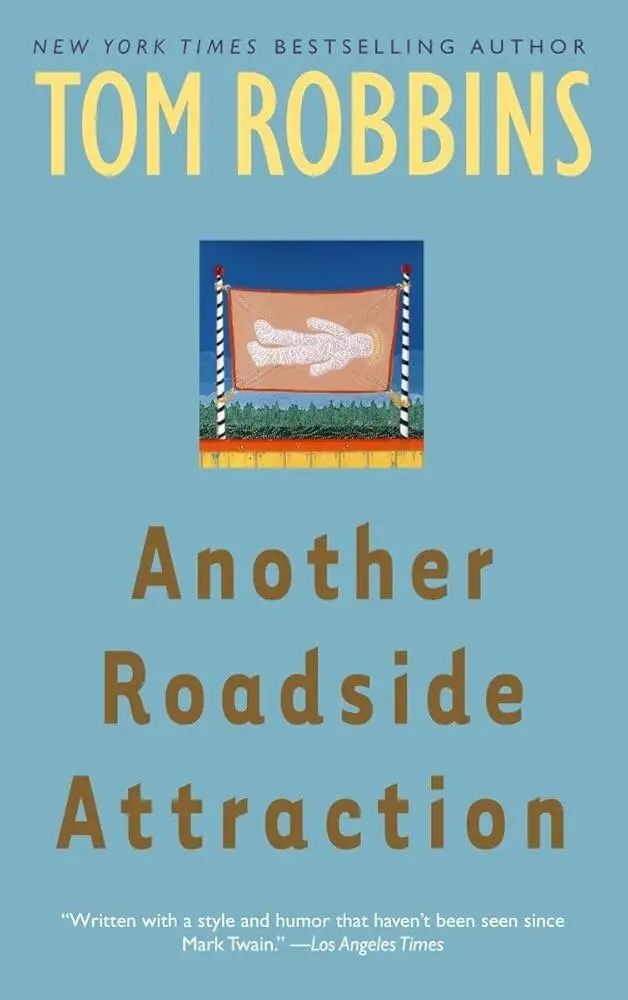
I had almost forgotten about Tom Robbins’s novels. Here’s the Times obituary (gift link).
His story lines were secondary and hard to explain; one reads a Tom Robbins novel for the verve of a well-wrought sentence, not a taut narrative. His literary currency was exaggeration, irony, bathos and the comic mythopoetic, combined for an effect that was truly his own.
The story lines were fun, but even more so was the action along the way. Unlike the Very Serious Novelists, Robbins enjoyed life and shared that joy with us. But it was never just joy or acid trips.
“What bothers most critics of my work is the goofiness,” he told The New York Times in 1993. “One reviewer said I need to make up my mind if want to be funny or serious. My response is that I will make up my mind when God does, because life is a commingling of the sacred and the profane, good and evil. To try and separate them is fallacy.”
I’ve mentioned my disappointment at most of today’s fiction. We don’t need another novel about the travails of a male English professor longing for a female student. We need something much more like Greek myths.
Mr. Robbins claimed to draw inspiration from Asian philosophy and Greek myths — not as source material, but as paradigms for thinking through how to represent his take on reality.
“Reviewers also describe my work as ‘cartoonish,’ which I take as a compliment, because I love cartooning, and cartooning is very Greek,” he told The Seattle Weekly. “The creators of the Greek myths worked like cartoonists, painting in big bold strokes without a lot of physical or psychological detail.”
Robbins’s books served me well at a difficult time in my life.