
Erik Visits an American Grave, Part 1,740
 By
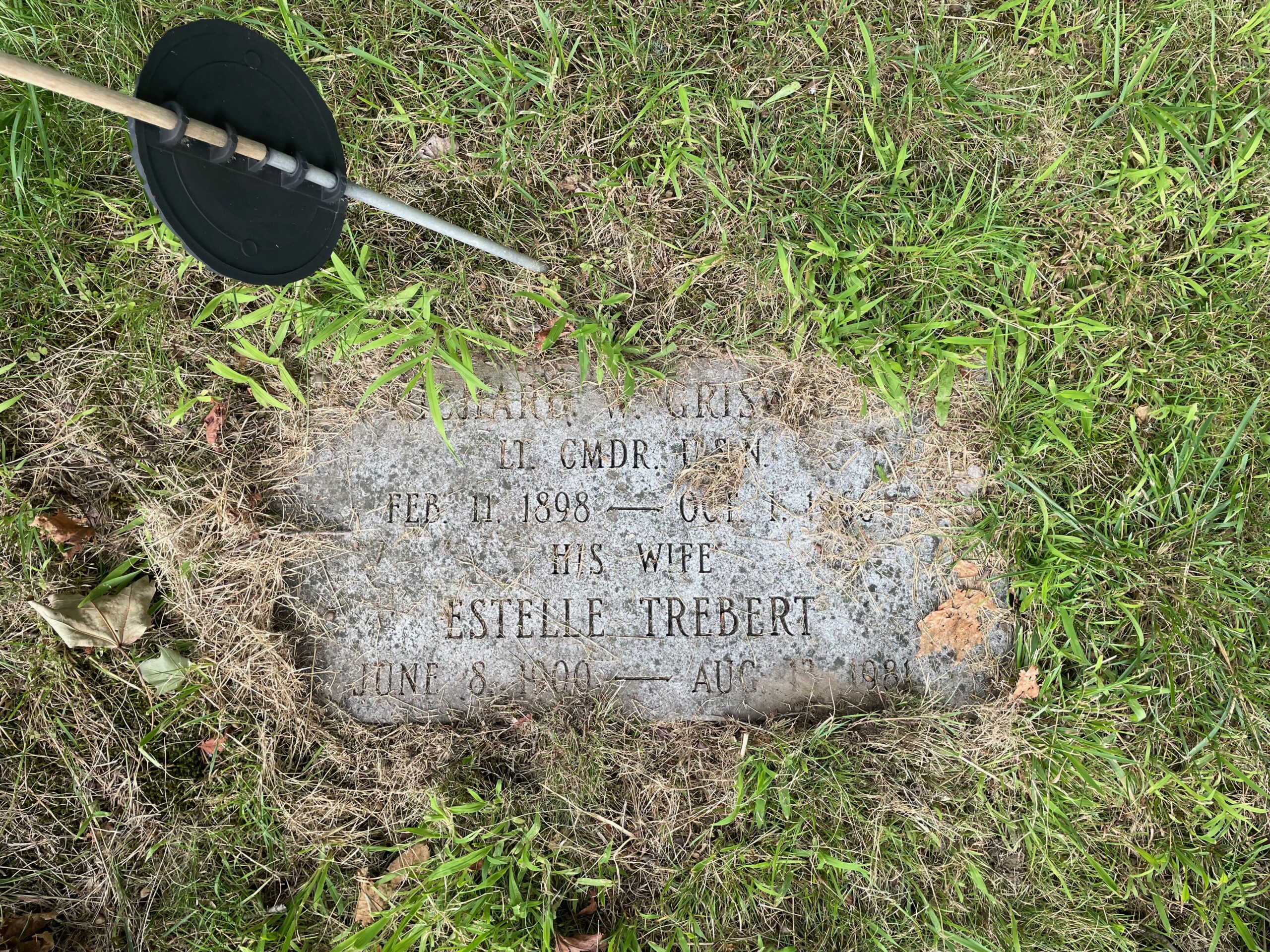
By This is the grave of Estelle Griswold.
Born in 1900 in Hartford, Estelle Trebert grew up a pretty normal kid. She was very smart but a terrible student, which led to her skipping two grades earlier in her schooling but then being held back in high school because she missed so class so often one year. She was raised Catholic but it didn’t stick and in fact, like a lot of Catholics, she realized her parents should have divorced but didn’t because of their faith, which didn’t seem very convincing to her. She wanted to go to a music college, but her parents couldn’t afford it, so she worked at a bank to put herself through. She actually was good enough and independent enough that in in 1922, she moved to Paris to pursue a singing career. Two things here. First, her parents were completely outraged. This was not what a good Catholic girl did. She was 22! She should be married with babies!!! Second, she already demonstrated a strong sense of independence and control over her own life.
Trebert’s French experience didn’t quite work out, though evidently it wasn’t because she lacked talent. Rather, she contracted tuberculosis, which meant she couldn’t really sing like she could before. She did manage to beat it. She embraced the art expat scene in France, both in Paris and Nice, and evidently was engaged to a playwright for a time. Then her parents got sick and she came home and they died shortly after. After that, she worked a bit in New York and Chicago but eventually came back home to Hartford, where she married Richard Griswold in 1927. He was no local boy really himself, having fought in World War I and worked in New York in advertising. They moved to New York, where he continued his advertising career and she got work singing on NBC Radio.
In 1935, the Griswolds moved to Washington. Estelle initially still sang, but decided to give that up and instead went to George Washington University to study medicine and while I don’t think she ever officially became a doctor, she did start teaching some at the university. Her emphasis on women’s health and her general beliefs in humanitarian approaches to the world would serve her well. Now, Richard Griswold was working for the State Department during World War II in the Office of Political Affairs, which was probably a good place for an ad man. He spent quite a bit of the war in Europe. Estelle wanted to join him as soon as possible, but that wasn’t until 1945, when the war ended. She immediately went to Europe and determined to do something about the refugee crisis overwhelming the continent that year. So she tried to get a job with the United Nations Relief and Rehabilitation Agency. She didn’t get that job, so she did just what you might think she would do–she figured out who was really in charge of the agency, went to meet them, and told them to hire her. They did so too.
It was at this time that Griswold became particularly concerned about issues of birth control. Now, this was the era in which people in rich countries blamed the problems of the poor on overpopulation, which really wasn’t the issue and which had all sorts of eugenic connotations. Griswold was not immune from this. She came to believe that part of the cause for the poverty of these refugees was too many children. That wasn’t exactly incorrect, but also sort of missed the point. In any case, she saw some very real starvation and many horrible things in Europe, as she worked to find nations to resettle various nationalities of refugees.
Now, we can criticize the overpopulation thing, and we should. But Griswold also believed that the solution was women controlling their own bodies, which is an absolute good and the best answer if you believe that is an issue. She became a passionate fighter in the second half of her life for reproductive rights, birth control, and sex education, not only in the U.S., but globally. The Griswolds returned to the U.S. in 1950 and Estelle became involved in Planned Parenthood. They moved to New Haven and she worked with the infertility and the martial counseling program at Yale. She was a good person for all of this. She, Griswold was herself infertile and she hated that. They actually lived across the street from New Haven Planned Parenthood and got to know the workers there.
Now, Connecticut still had a Comstock Law on the books, having banned contraception in 1879. Now it was the mid-50s. Feminists wanted to end this. I mean, come on, we were in the postwar period with Victorian laws still controlling women’s lives. You know who had pushed this law through the legislature actually? P.T. Barnum! He was a state legislator at the time. So they asked Griswold to become their executive director and launch a legal challenge. She was reluctant. This was a lot. But then her husband was diagnosed with emphysema (ah, the 50s) and he couldn’t work much. She now had to support them and so the money pushed her to do it.
It was a whole group of people involved in what became Griswold v. Connecticut. Griswold, of course, but also an anonymous married couple who had given birth to three children who all had died of the same genetic condition shortly after birth. Then there was C. Lee Buxton, a Yale doctor, and civil rights lawyers Fowler Harper and Catherine Roraback. Others too of course. They opened a health clinic in 1961 to pass out birth control. Hired good doctors, covered all their bases. The cops came almost right away. Griswold and her friends had picked out very specific women to treat too. It was all a test case of course, so they laid the groundwork they best they could. It wound its way through the courts and when the Supreme Court overthrew the old law in Griswold v. Connecticut by a 7-2 vote in 1965, it seemed almost inevitable. Of course the nation would continue to move in a way toward rationality, privacy, and personal freedom. Incidentally, it was Potter Stewart and Hugo Black who dissented, based on the idea that the Constitution does not in fact guarantee privacy anywhere in its text, which is true but irrelevant if we want to live in a modern society. William O. Douglas wrote the majority opinion.
Griswold stepped down as director of the Planned Parenthood clinic as soon as the decision was announced. There were long standing personal tensions between her and the rest of the organization, at least in part stemming from her asking them if she and her husband could move into the carriage house connected to its offices so he wouldn’t have to walk up stairs due to his emphysema and probably other reasons too. Richard died in 1966. She stayed in New Haven, eventually spending winters in Fort Myers, where she died in 1981. She was 81 years old.
At the time of her death, it would seem impossible to overturn Griswold. Today? Well, as Scott replied when I told him was writing this post, Sam Alito probably has a portrait of P.T. Barnum on his wall.
Estelle Griswold is buried in Wethersfield Cemetery, Wethersfield, Connecticut.
If you would like this series to visit other heroes of the fight for birth control, you can donate to cover the required expenses here. Charles Knowlton is in Ashfield, Massachusetts and Katharine McCormick is in Chicago. Previous posts in this series are archived here and here.