
Our Orwellian moment
 By
By 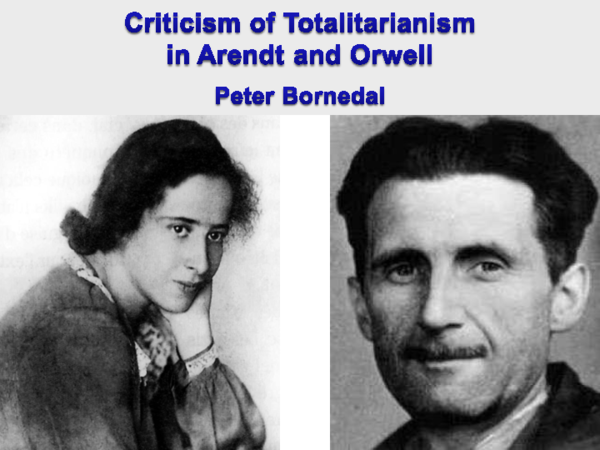
Teaching at an American law school in 2026 is a little like holding training sessions for future firefighters in a building that is actually on fire at the moment.
I had that sensation quite distinctly yesterday, when Donald Trump either lied about or expressed his delusional mental state regarding imaginary negotiations with the Iranians, regarding stopping at least the US’s participation in the flagrant series of war crimes now happening in Iran. (It’s apparently necessary to repeat constantly that the grotesque awfulness of the Iranian regime does not somehow make it legal to wage war against it because one would like to install a different regime, via apparently some combination of state violence and magical thinking).
That Trump was lying or hallucinating or more likely some combination of both was almost immediately obvious. We now live in a world in which there’s absolutely no reason to put any trust whatsoever in anything Donald Trump and his administration say about anything, which is to say we are living, in psychological terms, in an essentially totalitarian political mental world. This is most evident in the fact that Trump’s continual flagrant lying and/ot delusions about the most serious matters of state have zero political consequences, for reasons laid out by Hannah Arendt in The Origins of Totalitarianism:
In an ever-changing, incomprehensible world the masses had reached the point where they would, at the same time, believe everything and nothing, think that everything was possible and that nothing was true. … Mass propaganda discovered that its audience was ready at all times to believe the worst, no matter how absurd, and did not particularly object to being deceived because it held every statement to be a lie anyhow. The totalitarian mass leaders based their propaganda on the correct psychological assumption that, under such conditions, one could make people believe the most fantastic statements one day, and trust that if the next day they were given irrefutable proof of their falsehood, they would take refuge in cynicism; instead of deserting the leaders who had lied to them, they would protest that they had known all along that the statement was a lie and would admire the leaders for their superior tactical cleverness.
You really could not sketch a more precise picture of the mental world of the MAGA base, whose members simultaneously believe everything Trump says with cultish fervor, and admire him for lying constantly to them as well.
I don’t know how much it’s been noted that Arendt’s description of totalitarian political psychology is very close to that offered by Orwell, in an only slightly satiric/hyperbolic form, in 1984. For example, the childishly naïve Parsons remains totally unaware that he lives in a world built on nothing but the endless lies of the totalitarian ruling party. Meanwhile, the book’s central character, Winston Smith, realizes he and Parsons’ work colleague, the intellectual Syme, is doomed by the very fact of his intelligence:
Has it ever occurred to you, Winston, that by the year 2050, at the very latest, not a single human being will be alive who could understand such a conversation as we are having now?’
‘Except-‘ began Winston doubtfully, and he stopped.
It had been on the tip of his tongue to say ‘Except the proles,’ but he checked himself, not feeling fully certain that this remark was not in some way unorthodox. Syme, however, had divined what he was about to say.
‘The proles are not human beings,’ he said carelessly. ‘By 2050 earlier, probably — all real knowledge of Oldspeak will have disappeared. The whole literature of the past will have been destroyed. Chaucer, Shakespeare, Milton, Byron — they’ll exist only in Newspeak versions, not merely changed into something different, but actually changed into something contradictory of what they used to be. Even the literature of the Party will change. Even the slogans will change. How could you have a slogan like “freedom is slavery” when the concept of freedom has been abolished? The whole climate of thought will be different. In fact there will be no thought, as we understand it now. Orthodoxy means not thinking — not needing to think. Orthodoxy is unconsciousness.’
One of these days, thought Winston with sudden deep conviction, Syme will be vaporized. He is too intelligent. He sees too clearly and speaks too plainly. The Party does not like such people. One day he will disappear. It is written in his face.
I’m reminded of this passage every time I run into the rationalizations of the tiny cadre of actually existing Trumpist intellectuals,* in venues such as American Greatness, which is the house organ of the “West Coast Straussians” at the Claremont Institute.
*BTW I hate the no true Scotsman argument that there are no real Trumpist intellectuals. “Intellectual” is not a compliment: it’s merely a description of a certain sort of person — one who is interested in ideas for their own sake. And it certainly doesn’t mean those ideas are good, or even sane.