
Kavanaugh is the new Alito, and another notes on Learning Resources
 By
By 
I’ve had the chance to read the Court’s opinion striking down Trump’s plainly unauthorized tariffs. One thing to say at the outset is that Roberts was able to form only a partial majority coalition in striking down the tariffs. Roberts, Gorsuch, and Barrett continue to insist that “major questions” doctrine is a thing, and I mean I’ll take it since it was always the most viable path to getting enough votes for the right outcome. But as Sotomayor, Kagan, and Jackson insist, this is just a straightforward ultra vires case that doesn’t require any novel doctrines that expand the power of the federal judiciary. Justice Kagan, writing for Sotomayor and Jackson:

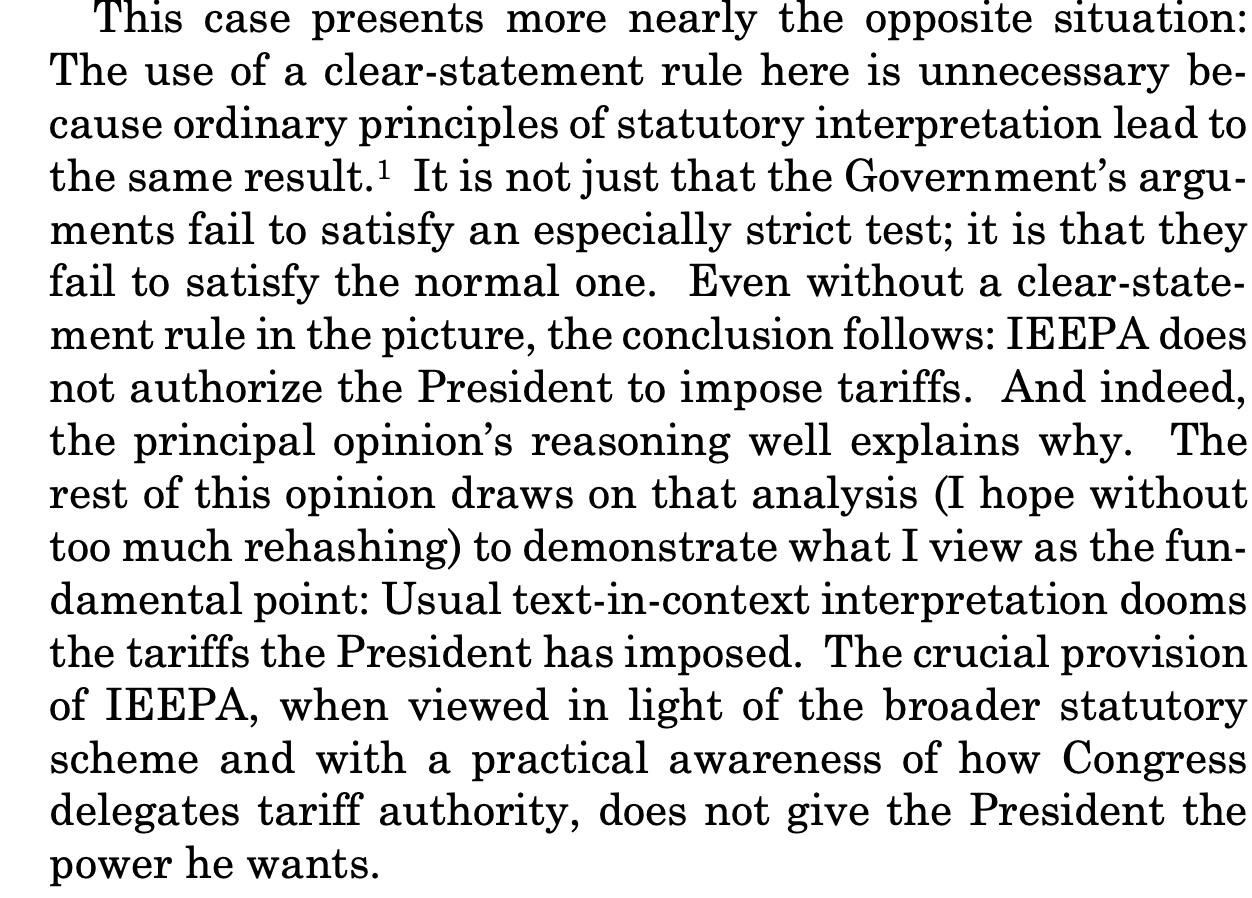

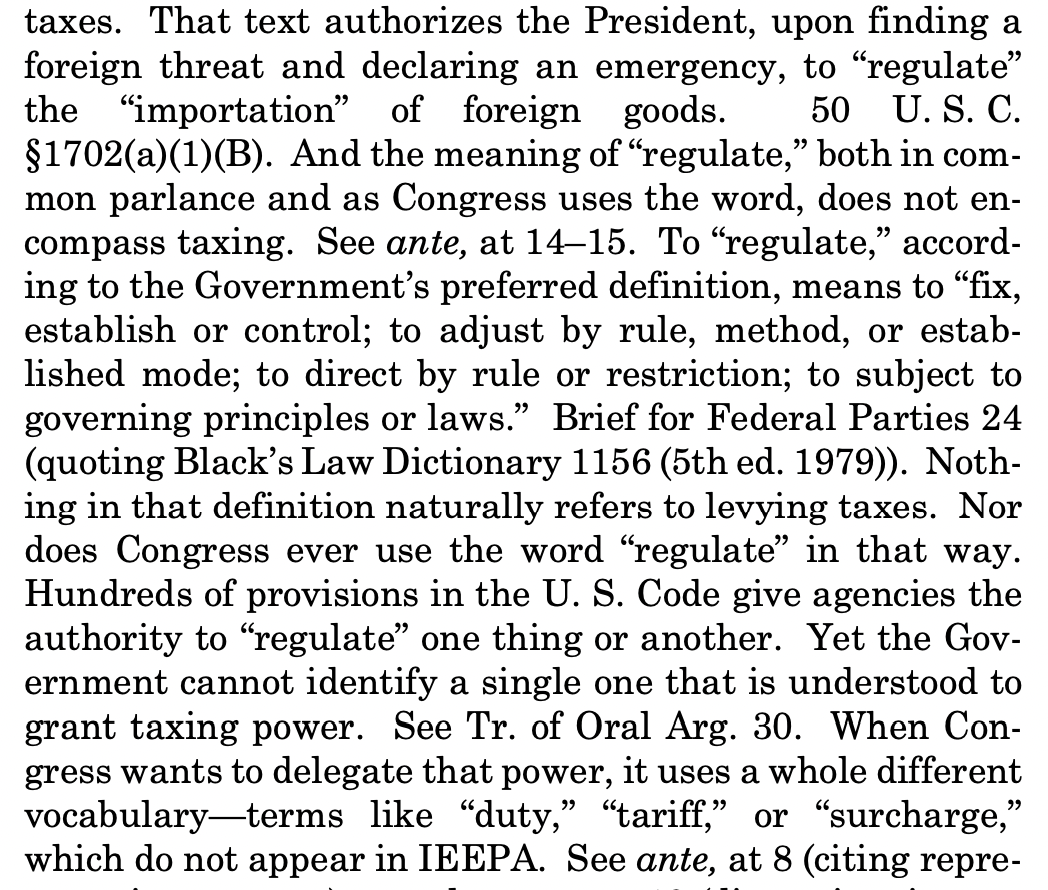
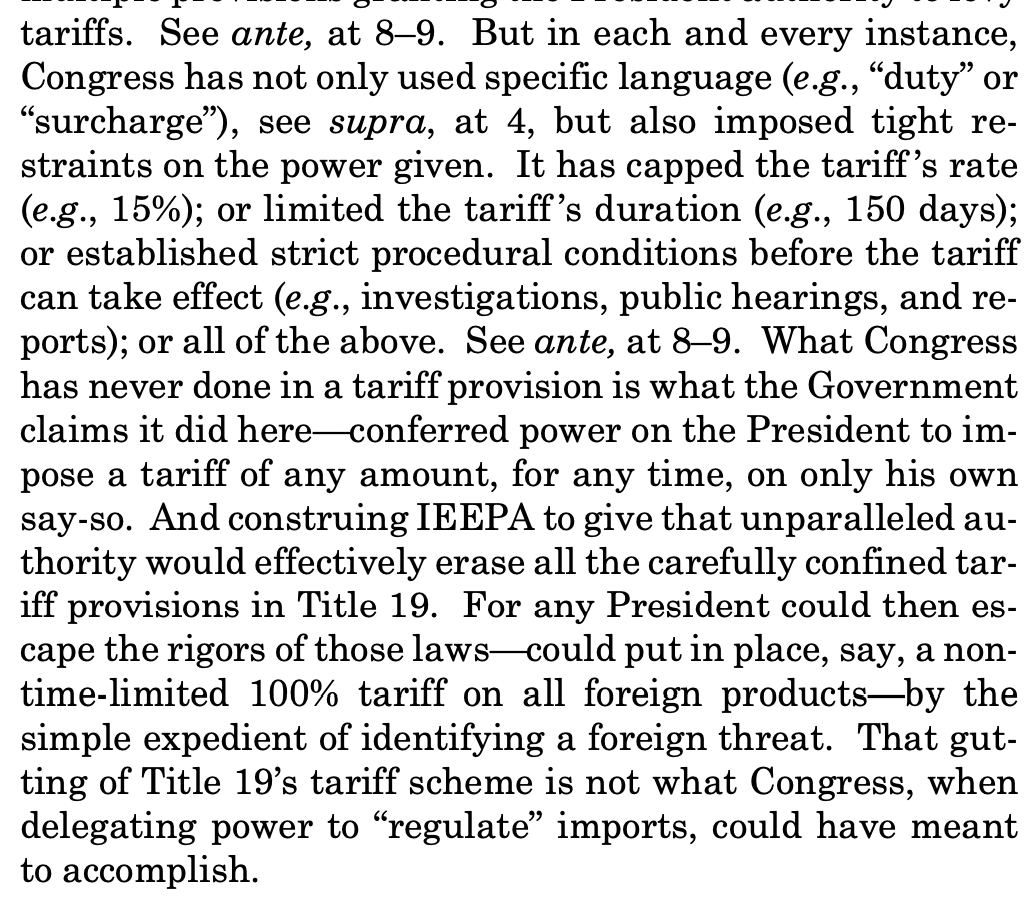
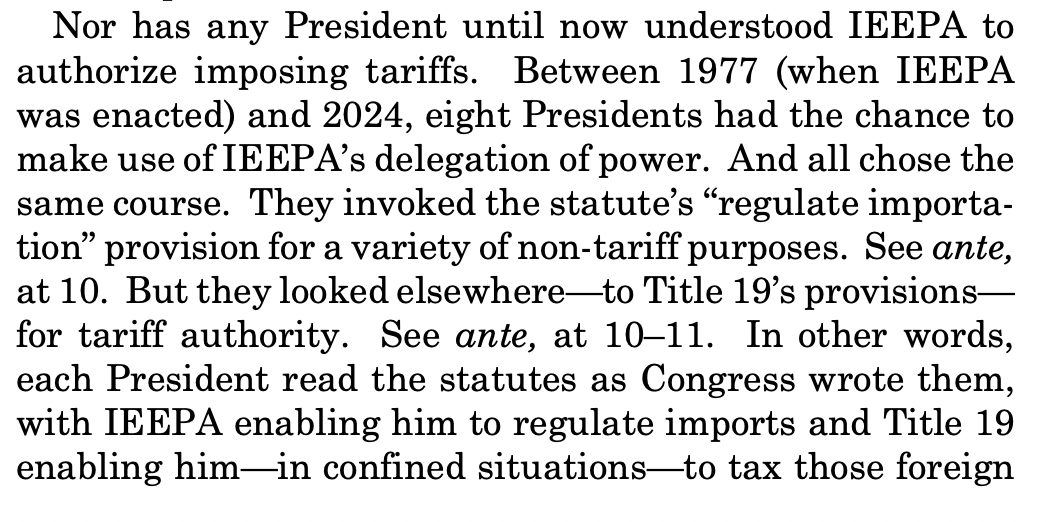

As Kagan explains, Roberts’s insistence on pretending that “major questions” doctrine is a thing is particularly strained. The statute plainly does not authorize the tariffs reading the relevant provisions in isolation or in context, and this has also been the unbroken practices of presidents between the enactment of the statute and Trump 2.0.
Barrett and Gorsuch trade concurrences, in which the former argues that “major questions” is just a modest logical implication of textualism, while Gorsuch insists that it requires a libertarian reading of most of the U.S. Code. Kagan has an amusing footnote declining Gorsuch’s insistence — which he previewed at oral arguments — that everybody secretly agrees with him:
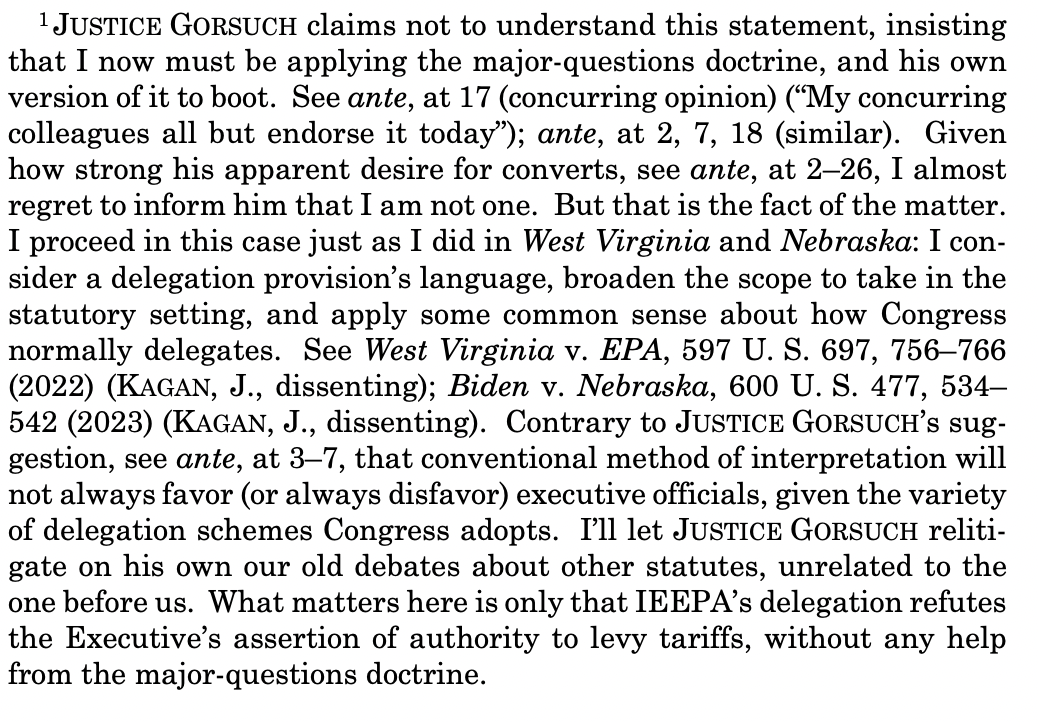
But while Gorsuch’s insistence that Anarchy, State and Utopia be used is an interpretive canon is not a good theory, he is at least willing to apply it when the results do not conform to the desires of the Trump administration. The three dissenters, conversely, are left having concluded that language authorizing the Secretary of Education to “waive or modify” student loan payments did not give the Biden administration the power to modify student loan payments but that the power to “regulate” imports gives the Trump administration an unconstrained power to tax.
Justice Kavanaugh’s dissent goes on for 61 pages. One assumes that the primary purpose of this was to delay delivering the bad news to Mister Trump for as long as possible, although any teacher recognizes the student who thinks they can make up for not having prepared for the assignment by writing a lot of words. All you really need to know if Kavanaugh’s assertion that “IEEPA merely [!] allows the President to impose tariffs somewhat
more efficiently to deal with foreign threats during national emergencies.” Aside from the farcically false modesty of this dexcription of a novel and sweeping new asserting of executive power, there are the problems that none of these tariffs were based on any actual “threat” or “emergency.”
Kavanaugh has already issued the most embarrassing and authoritarian opinion of the Trump administration’s second term, so I guess in for a dollar. If rumours that Alito will step down at the end of the term prove true, we know who’s ready to assume his mantle as the most robotic partisan on the Court. “His classiest move” I can’t believe a prominent liberal legal academic one at least pretended to believe, and who knows may have convinced themselves — the way bad faith operates at that level of legal academia can be hard for outsiders to fully parse.