Subscribe via RSS Feed

Tag: "film"

Bill Murray as FDR

[ 28 ] May 13, 2012 | Erik Loomis


I’m still having trouble seeing Bill Murray as Franklin Roosevelt
, but he does have the look down.

Also, I’m really glad Murray refuses to do Ghostbusters 3.

Burton

[ 67 ] May 11, 2012 | Erik Loomis

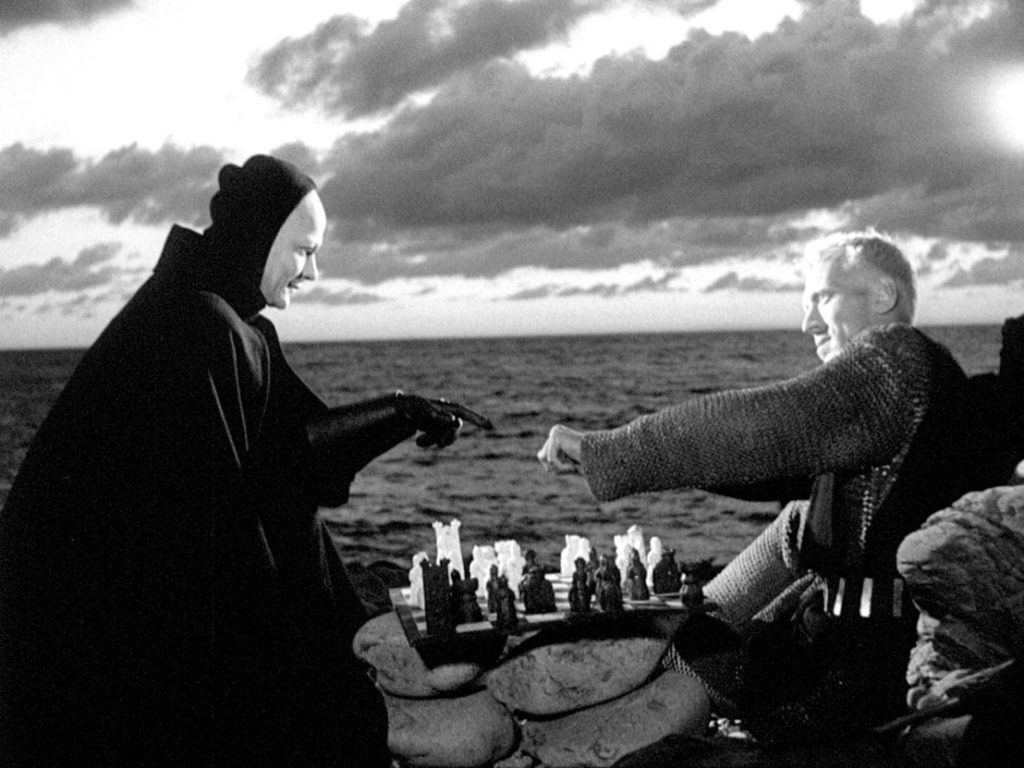
The problem with Tim Burton is not that he repeatedly casts Johnny Depp and Helena Bonham Carter. That’s silly. Was it a problem that Akira Kurosawa repeatedly cast Toshiro Mifune? That Ingmar Bergman hired Liv Ullmann and Max von Sydow over and over? That Scorsese had an amazing 25 year run with Robert DeNiro? Of course not.

The problem with Tim Burton is that he has nothing left to say.

….An additional note. One useful thing in that linked piece is to suggest Burton might benefit from doing something entirely different. I do agree with that, though I’m extremely skeptical of his ability to pull it off. One thing I love about David Lynch’s The Straight Story is that not only is it a very fine film, but Lynch also clearly proved that he work in very different types of film with great skill. His weirdness is not a crutch, as opposed to Burton.

Silents

[ 31 ] May 8, 2012 | Erik Loomis

Geoffrey O’Brien has a great essay on silent films in the New York Review of Books. A very small selection:

The seduction of silent cinema is the seduction of a form as unique as opera or kabuki, a peculiar way of organizing one’s attention. It is a perpetual learning how to see, and a way of coming to the truth of one of Emerson’s observations: “The eye is final.” But there is the further peculiarity that what you see takes place in a world no longer there. Here are cities since reduced to rubble and rebuilt, stretches of countryside by now turned into interstates and strip malls, glaciated wilderness that has probably succumbed to climate change—and of course the faces of those now long dead, something too easily taken for granted but that haunts movies from the start. The inventors of the medium were already thinking about recording the living as a future consolation for their survivors.

There are really so many reasons to watch silent films: to see how people told stories without sound, to revel in the so very different styles of acting and filmmaking, to understand how Americans of all ethnicities could come together over entertainment that you didn’t need English capability to understand, because silent films often told amazing stories.

And of course because the past is weird. One thing I love about silents, particularly those before 1920, is that no one knew what they were doing. By this I mean that the standards of cinema and the creation of expectations on how to tell a story were still developing. So when turning on an early silent, you never really quite know what you are going to get.

Last night, I watched the remarkably bizarre and incredibly awesome The Mystery of Leaping Fish, starring Douglas Fairbanks. This 1916 film has Douglas as the Sherlock Holmes-esque detective Coke Ennyday trying to find out why a man with no discernible employment has so much cash (quite literally, he sleeps covered by money instead of blankets). Why does our hero have this odd name? Because he really loves cocaine. And other drugs. He constantly is shooting something into himself for uppers (he carries around a belt of syringes). He has a giant tub on his desk labeled “COCAINE” that he dips into rather liberally (by the handful). And when he discoverers a jar of opium, Coke Ennyday starts scooping it into his mouth with his fingers.

This is jaw-droppingly weird. Technically, cocaine had just become illegal under the Harrison Narcotic Act in 1915, but its use was well-known enough for audiences of the time. The best way to watch it is on Fandor, though there are incomplete versions available on YouTube. I guarantee it is worth your time.

New Frontiers in Labor Exploitation

[ 42 ] May 4, 2012 | Erik Loomis

Not only do you now have to pay to be an extra in a movie, but Groupon offers deals so you can pay less!

Noah?

[ 61 ] April 22, 2012 | Erik Loomis

Darren Aronofsky is directing a film about Noah and the ark starring Russell Crowe as Noah?

Um.

Wow.

Will the scenes on the boat be very, very slow?

Hey look, water!

The Vitagraph Smokestack

[ 0 ] April 3, 2012 | Erik Loomis

The last structure from the early New York film industry is in trouble. The old Vitagraph studio lot in Brooklyn is long gone, but its smokestack remains. It is falling apart and needs restoration. Here’s a petition to make that happen. This is a neat part of our early film past and worth your 2 seconds.

The Ballad of Peter and Peggy, Redux, in “A Little Kiss”

[ 26 ] March 30, 2012 | SEK

(It goes without saying that this is another one of those posts.)

Poor self-defeating Pete, trying his best to become the very Draper whose misery’s invisible to him. Remember when Pete had hope, and director John Slattery hammered the possibility of it home via reverse shots? How Pete saw Peggy longing for him:

Peg01

Returned her implicit, medium long offer in kind:

Pete01

And was returned in kind:

Peg02

And again:

Pete02

And again, an almost final invitaiton?

Peg03

Of course, between them in each reverse shot is the not-insignificant–and increasingly significant, given the racial aspects entering the series in future episodes–glass door separating the firm from the world it claims to represent. As I wrote in the post linked above:

The viewer is looking at Peter looking at Peggy in the first medium close up in the scene.  (There is a slight unreality to this point of view shot: it zooms in on the pair in a way only cameras can.  The zooming seems to act as a cinematic proxy for attention or concentration.)  Slattery made sure the nearly invisible wall separating them remained visible, which creates a tension between the intimacy of the close up and the reality of the glass walls separating them.  That he chooses a more intimate when these two are in different rooms is, for obvious reasons, significant.  She sees him peering at her and, by its positioning, the camera acknowledges the bond that will remain despite the increasing distance between them: the baby they had together.

But now Peter’s a father, only not of Peggy’s baby, but of his own. Who’s screen presence exists as such:

Mad men00262

See the baby? The one he had so he could be more like Draper? It’s sitting there, frame central, hovering invisible in that tacky chair he should’ve had the decency to replace if he’d had any sense of style. He’s becoming Draper–disappearing into the life he mistakenly believed he wanted. No children to greet him, just cold dinner and a warm shot of whisky. Don’t believe me? Let’s rewrind to the first season and remind you of a similarly framed shot:

Mad men00297

In this case, however, Betty’s lying about going to the community center to watch them film the pool–she’s off to watch pretty things die, as per the episode’s title, for”Sport.” But there’s something more than sport to her deliberations. She wants to savor the experience of watching something die. First she feeds the children, then she does the laundry:

Mad men00306

Then the camera acknowledges that she’s had an idea and zooms into a close-up to reiterate that fact:

Mad men00310

Note the joy on her face. Knowing that her idea is one that–whatever joy it might bring her, society would disapprove of, she ponders her decision for a moment:

Mad men00313

Moments are fleeting:

Mad men00317

Her decision has been made. Cut to exterior:

Mad men00319

Relief. Betty’s just a central figure staring at the sky in wonderment at all God’s creations:

Mad men00327

Look at those birds? The fact that they’re incapable of being centrally staged only emphasizes their freedom. The frame can’t constrain them! They’re free! If only Betty had an equivalently symbolic emblem of relinquishing societal constraints:

Mad men00333

She does. Her feelings of entrapment are nothing a healthy dose of nicotine can’t cure. Except why has she shifted stage-left? She had occupied the central portion of the screen, but now it’s as if she’s making room for something else. Whatever could that be?

Mad men00335

Of course, she being an American, the only thing she can do with her symbol of freedom is shoot it with … another symbol of her freedom. I wasn’t able to capture her aiming the gun, which is why the space on the right side of the frame had to be cleared, but that’s why it was. Oddly, her cigarette still occupies the central portion of the frame, as if, like the nicotine it delivers into her blood, is calming her down, making her transgressive violence possible. Can’t be sure. However, visually speaking, the indication is that Draper’s created/creating a sociopath, and the implication is that Peter’s following a similar path. He began his morning commutes in “A Little Kiss,” you’ll remember, alone and engrossed in a paper:

Mad men00120

His loneliness is highlighted by both the empty chair beside him and the man with the solitaire board across from him. By episode’s end, things seem a bit different, though:

Mad men00218

Wonder why that might be? Couldn’t have anything to do with, say, this:

Mad men00378

Nothing at all there. Not between Peggy and Pete. Not with a viable baby hanging out right there in a carriage.

Traffic in Souls

[ 29 ] March 12, 2012 | Erik Loomis

Given the day’s rather bizarre turn here, it seems like a good enough time to remind all of you with Netflix account that Traffic in Souls, the ridiculous 1913 film promoting the white slavery fears dominant in America during these years, is available for streaming. The film follows 2 Swedish sisters just off the boat at Ellis Island. One gets lured into a brothel by an offer of work, the other searches for her. I’m not sure what’s more eye-rolling about the film, the white slavery freak-out of the late Progressive Era or the fact that evidently the woman suckered into the brothel never actually has sex. Were that to have happened, the kidnappers would have beat and drugged her. But you couldn’t show that in 1913. Interestingly though, the scandalous nature of the film subject did cause white slavery to be a banned subject under the Hays Code of 1934.

It’s not really that bad of a film I guess. And it is worth watching for those of you interested in Progressive Era sexuality. However, I wouldn’t exactly take it as a documentary.

Sweet Dreams

[ 14 ] February 29, 2012 | Erik Loomis

A little French film from circa 1907 to help you have the most pleasant dreams this evening.

No nightmares at all to be had tonight. Nope. None.

Erland Josephson, RIP

[ 1 ] February 27, 2012 | Erik Loomis

One of the last great postwar European actors has passed. Erland Josephson, star of many of Ingmar Bergman’s and Andrei Tarkovsky’s later works, died at the age of 88. While partial to Bergman overall, and especially to Scenes from a Marriage, Josephson’s first lead role for Bergman, I think my favorite work of his is in Tarkovsky’s The Sacrifice. Here is one scene in remembrance:

Let’s Make a Sandwich

[ 27 ] February 18, 2012 | Erik Loomis

A little morning deliciousness for you, from 1950 and via the American Gas Association. America’s finest food from America’s finest era of cooking.

Vincent and the Doctor, Together Alone

[ 16 ] February 15, 2012 | SEK

(This be another one of those posts in which I “[feign] some kind of cultural superiority … even though [my] opinions and tastes are largely shite of the first water [that force most commenters to] make an effort to shaddup when [I] want to wax long and philosophical about some mainstream film [I'm] content to call art.)

I covered the palette of “Vincent and the Doctor” in my post about the Leverage episode “The Van Gogh Job,” so I’ll save some time and just say the wheat:

Doctor who vincent and the doctor2012-02-15-11h48m59s146

The wheat:

Doctor who vincent and the doctor2012-02-15-11h49m01s166

The wheat:

Doctor who vincent and the doctor2012-02-15-11h49m04s193

The wheat may not seem that important—though damn do I love it—but it calls to mind Woody Allen’s famous parody of Ingmar Bergman in Love & Death, which is relevant because “Vincent and the Doctor” is an episode devoted to the consequences of loneliness (felt or otherwise). The Doctor’s alone because he’s the Doctor; Amy’s alone because (unbeknownst to her) Rory’s been unwritten from existence; Vincent’s alone because Vincent’s always been alone; and the Krafayis is alone because it’s been abandoned by its fellows. This is a story that’s fundamentally about lonely people “coming together,” only director Jonny Campbell doesn’t shoot it that way. I bring up the visual punning on the wheat because the shots it parodies are relevant. To wit:

Read more…

Page 4 of 7« First...23456...Last »
  • Switch to our mobile site